Select the maps that interest you or find the one you need using the filters below.

TOPs are psycho-physical techniques developed to optimize human capacities.
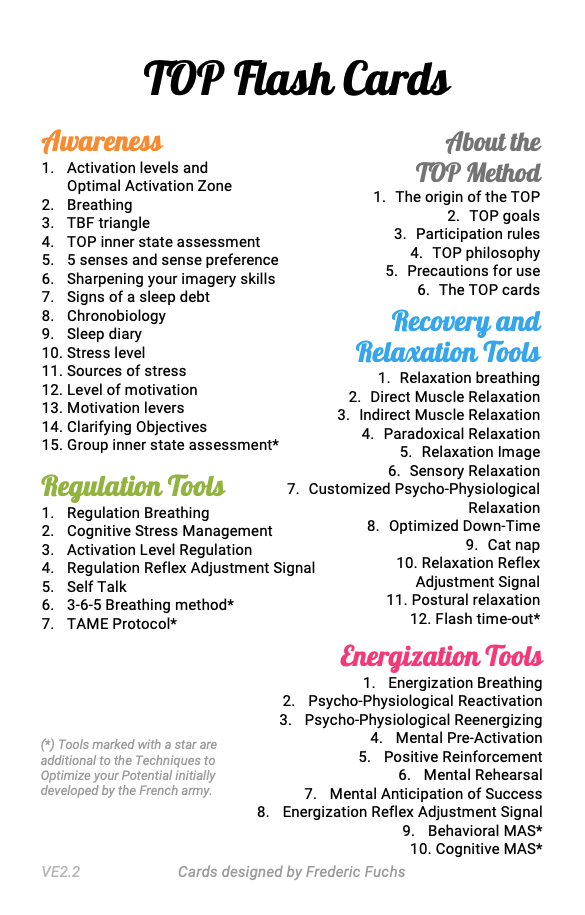
Potential Optimization Techniques constitute a complete arsenal of scientifically validated psychocorporal tools. Each technique meets specific needs and is part of a global approach to the development of human potential.
This thematic classification makes it easy to choose the appropriate technique according to your condition and goals. Each category targets specific physiological and psychological mechanisms to optimize your performance and well-being.
Les dynamization techniques stimulate your energy and prepare for action: Energizing Breathing, PAM, Mental Repetition, PMR, Positive Reinforcement and Energizing SAR. They activate the sympathetic system to optimize your performance.
Les relaxation techniques promote recovery and calming: Relaxing Breathing, RMD/RMI, Sensory Relaxation, TPO, Relaxation Image and R3P. They activate the parasympathetic system for optimal regeneration.
Les control techniques balance your internal state: Regulatory Respiration, Cognitive Stress Management, RNA and Regulatory SAR. They harmonize the sympathetic and parasympathetic systems.
This organization allows you to effectively navigate the TOP universe according to your immediate needs. The same day may require an energizing technique in the morning, regulating at noon and relaxing in the evening.
The gradual mastery of this repertoire develops your autonomy and your ability to adapt. Each technique becomes a specific tool in your personal optimization toolbox.

Potential Optimization Techniques (TOP) were developed in the 1980s by the French Armed Forces Health Service to meet specific operational needs.
TOPs were born from the need to optimize the performance of soldiers in an operational situation while maintaining their physical and psychological well-being. They meet the particular requirements of high-pressure environments.
The TOPs are based on multidisciplinary research:
Since their creation, TOPs have evolved and adapted to different sectors: top-level sport, business, health, education, constantly optimizing protocols based on feedback.
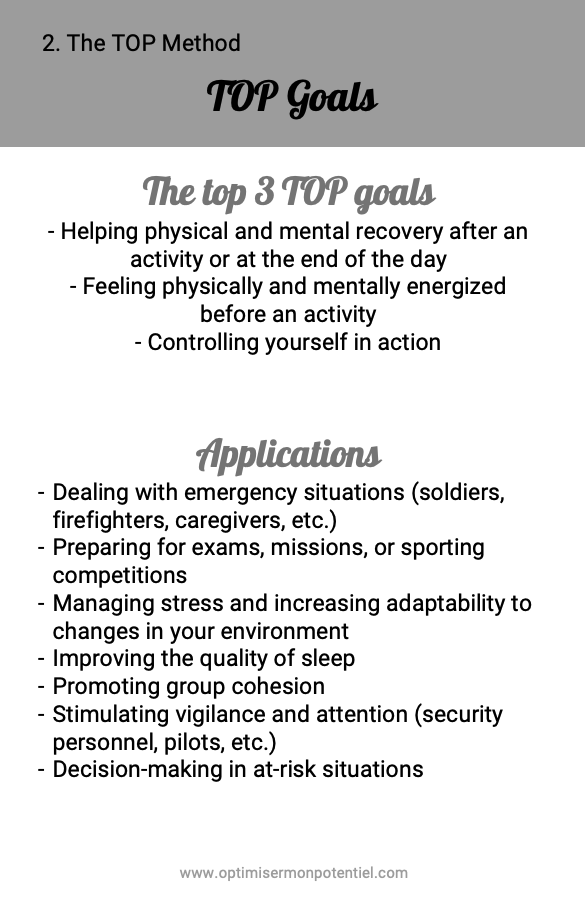
TOPs find their application in many areas:
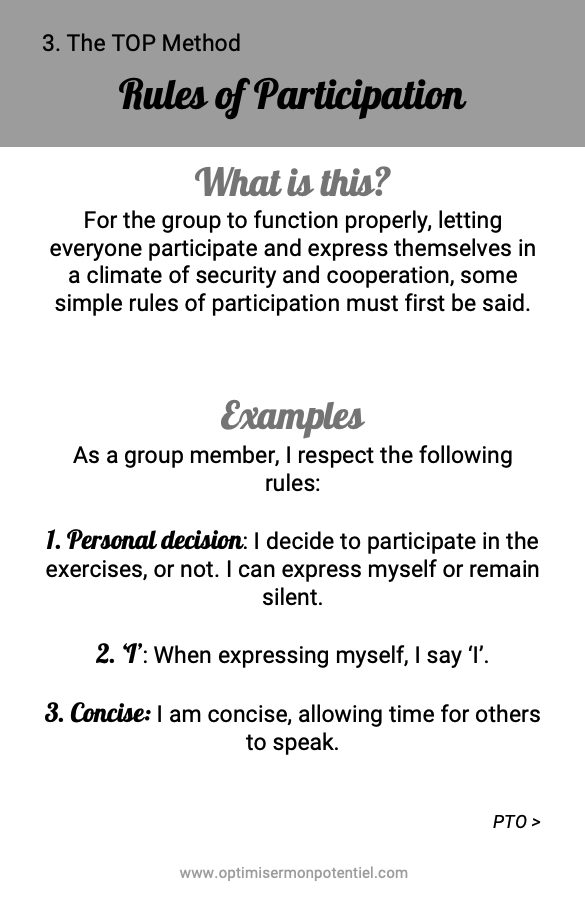
For an optimal and respectful practice, here are the rules of participation:
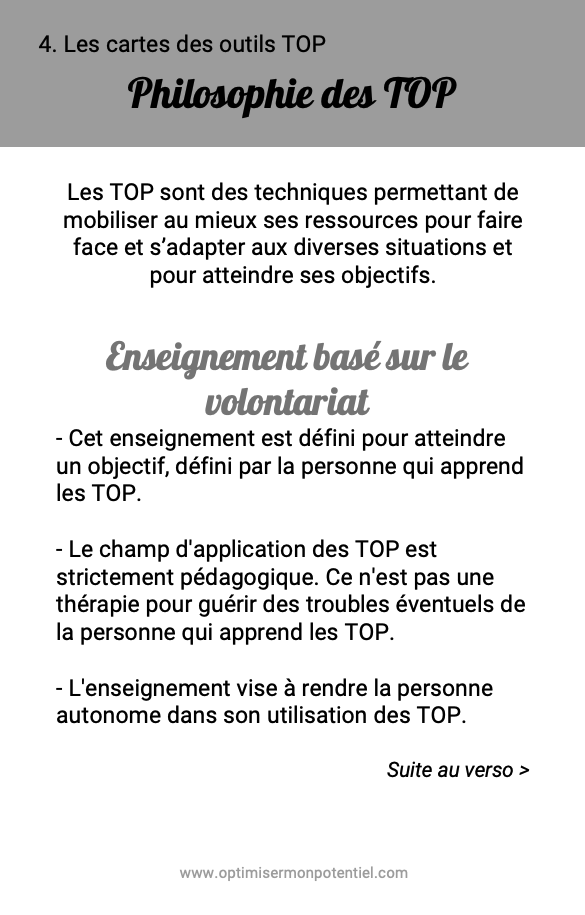
The TOP philosophy is based on humanist values and scientific principles:

Although TOPs are generally secure, certain precautions must be respected:

TOP cards are educational materials that facilitate the learning and practice of techniques:

The activation level corresponds to the state of alertness and alertness of your body at a given moment. This fundamental concept in performance psychology directly determines your ability to perform a task effectively and accurately.
Each individual has their own Optimal Activation Zone (AOA), this ideal level where performance and well-being combine perfectly. This zone represents the delicate balance between wakefulness and relaxation, concentration and fluidity.
Underactivation is manifested by fatigue, sleepiness, and lack of energy. In this state, your potential remains untapped, your reactions are slowed down and your motivation is reduced. In contrast, over-activation generates stress, tension and anxiety, interfering with your abilities and impairing your judgment.
Learning to accurately identify your activation level is a fundamental skill. This self-awareness allows you to choose the most appropriate TOP technique to achieve or maintain your ZAO.
This assessment is based on the observation of multiple indicators: physical sensations, emotional state, mental clarity and ability to concentrate. The more you develop this internal sensitivity, the more autonomy and efficiency you gain.
Mastering this concept transforms your approach to performance. Instead of undergoing your internal states, you learn to consciously modulate them to optimize your results and your personal satisfaction.

Breathing is at the heart of all TOP techniques. It is the first self-regulation tool available to everyone.
Controlling your breathing is the key to the effectiveness of other techniques.

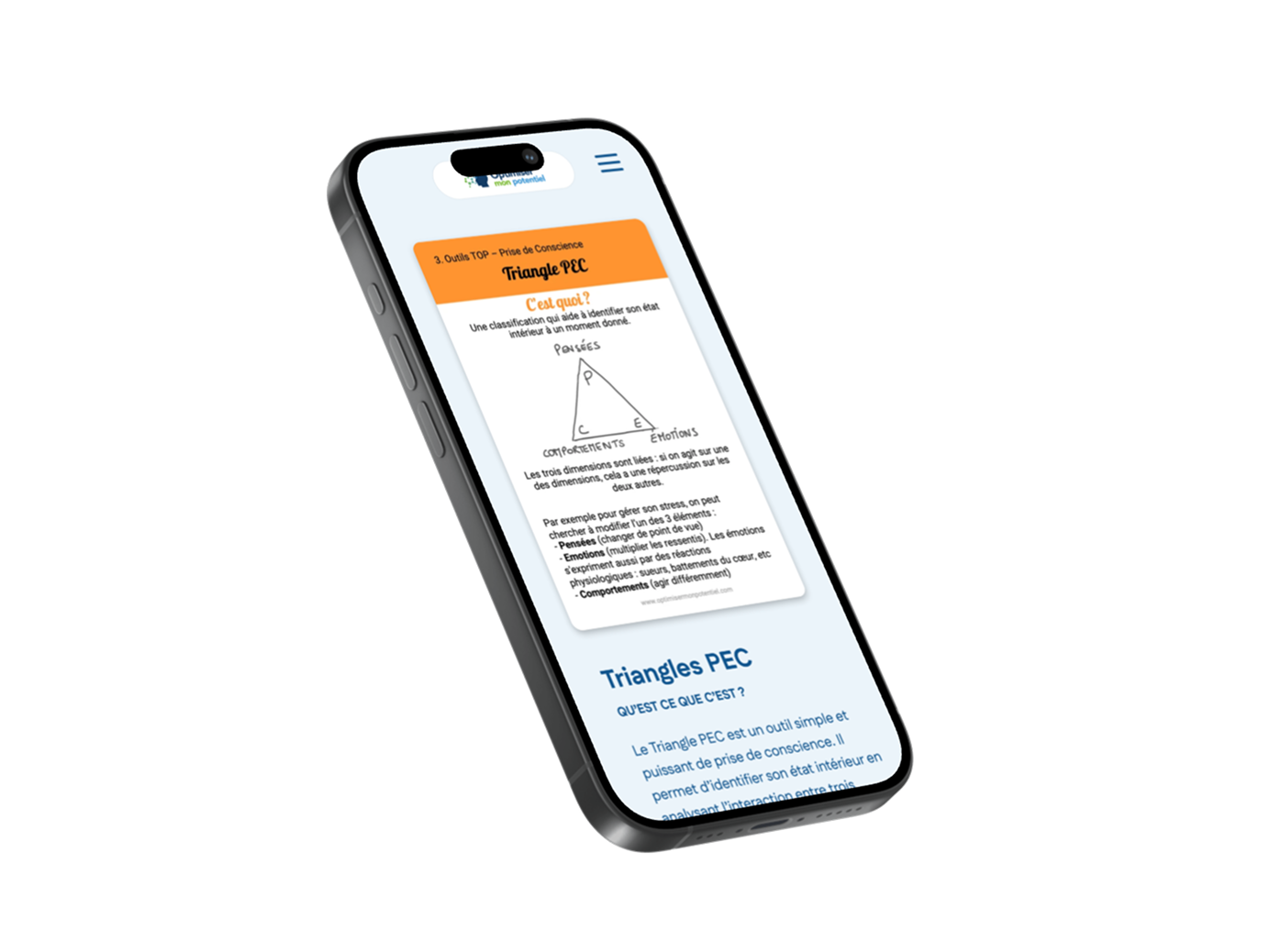
The PEC Triangle is a personal diagnostic tool that allows immediate and global awareness of your inner state. This self-assessment technique analyzes the dynamic interaction between three fundamental dimensions of the human being:
Much more than a simple assessment, the PEC Triangle reveals the subtle connections that unite our thoughts, emotions, and behaviors. This approach offers a precise mapping of your current state to better navigate your daily life.
How does it work?
At the heart of the PEC Triangle, three dimensions intertwine and influence each other:
💭 THOUGHTS — “What I think”
♥️ EMOTIONS — “What I feel”
🏃 BEHAVIORS — “What I do”
These three dimensions are interdependent. The PEC Triangle reveals these subtle connections and allows you to:
✨ Identify your overall condition in a few seconds
🎯 Choosing the TOP technique the most adapted to your situation
📈 Follow your evolution as the sessions go by
🔄 Understand your patterns Staff
The PEC Triangle is used as a personal compass:
It is also possible to imagine an evaluation scale of 0 to 10 and to consider at the end of your self-evaluation that a result:
This awareness tool accompanies you towards a better knowledge of yourself and a more personalized and effective TOP practice.
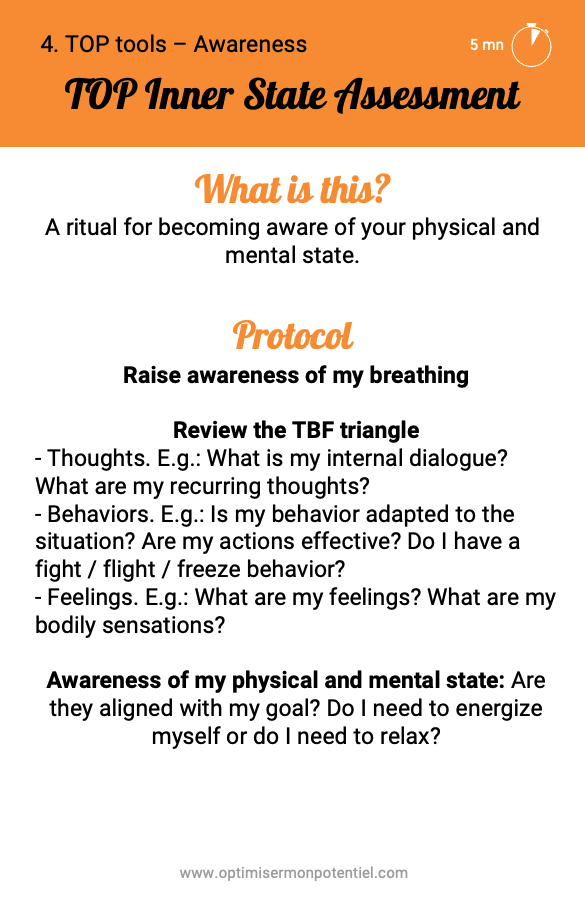
A tool for rapid self-assessment of one's psycho-physiological state before starting a session. This preparatory phase is essential to obtain maximum effectiveness from TOP techniques.
Take a few moments to take stock of:
This evaluation makes it possible to:

The senses are the entry points to our perception. Understanding its preferred meaning optimizes the effectiveness of techniques.
Observe which sensory channel you use spontaneously to:
This knowledge allows you to personalize your TOP practice.
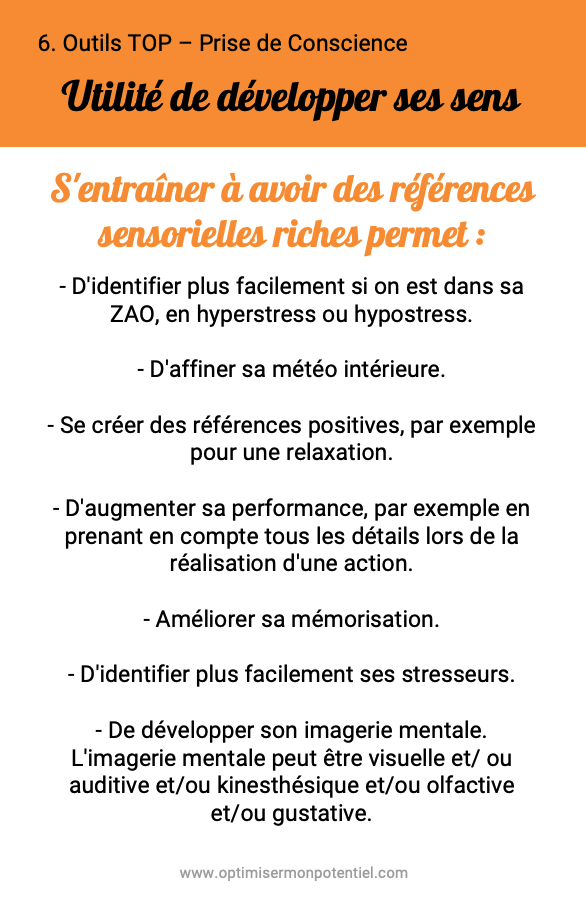
Sensory development significantly improves the effectiveness of TOP techniques.

Sleep debt builds up when sleep time is insufficient for individual needs. The effects of this deprivation are multiple and complex.

Chronobiology studies the biological rhythms that regulate our body over 24 hours.
24-hour cycle that regulates:

The sleep agenda is a scientifically recognized self-observation tool for optimizing the quality of one's rest and identifying personal patterns.

Stress is a normal coping reaction to the demands of the environment, but its excess becomes a problem. Evaluation makes it possible to choose the right intervention strategies.
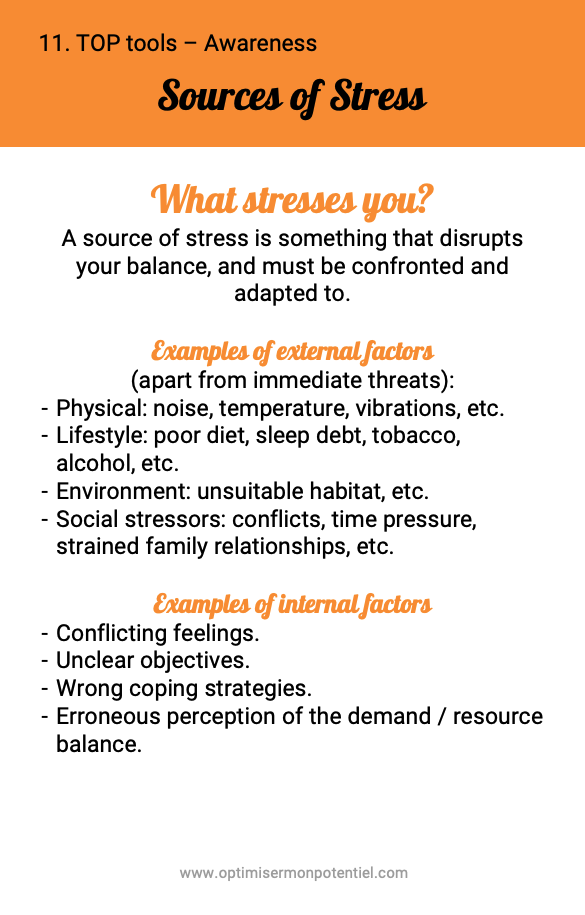
Recognizing the origin of stress makes it possible to better manage it and to choose appropriate strategies.

Motivation is the set of biological and psychological mechanisms that allow the initiation, maintenance and stopping of behavior. Evaluating it allows you to adapt your strategy and maintain your momentum.
Intrinsic motivation (pleasure, satisfaction) is more sustainable than extrinsic motivation (rewards, pressures).

Identify and activate your personal motivational levers to maintain your commitment.
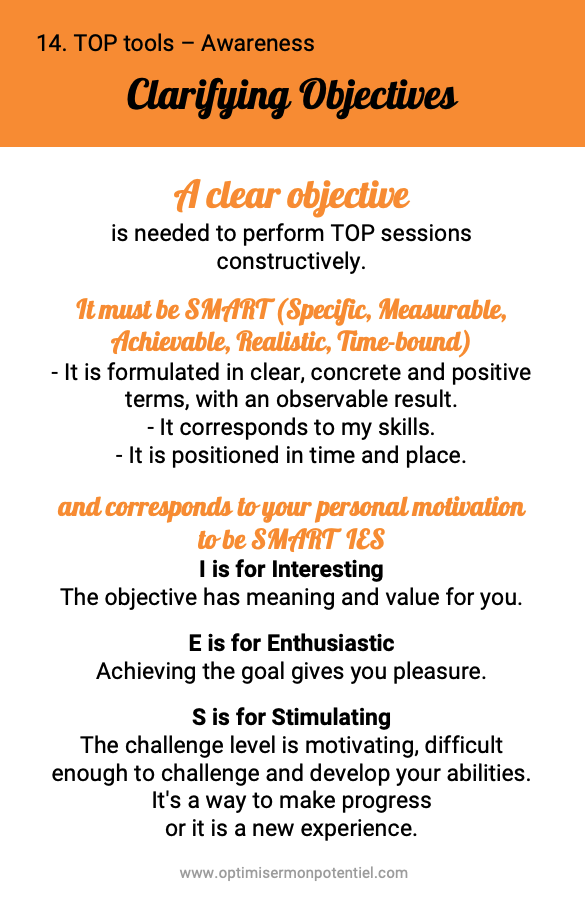
Clear goals are essential to maintain motivation and guide action effectively. The clarity of the objective directly influences cognitive, emotional, and behavioral consequences.
Add:
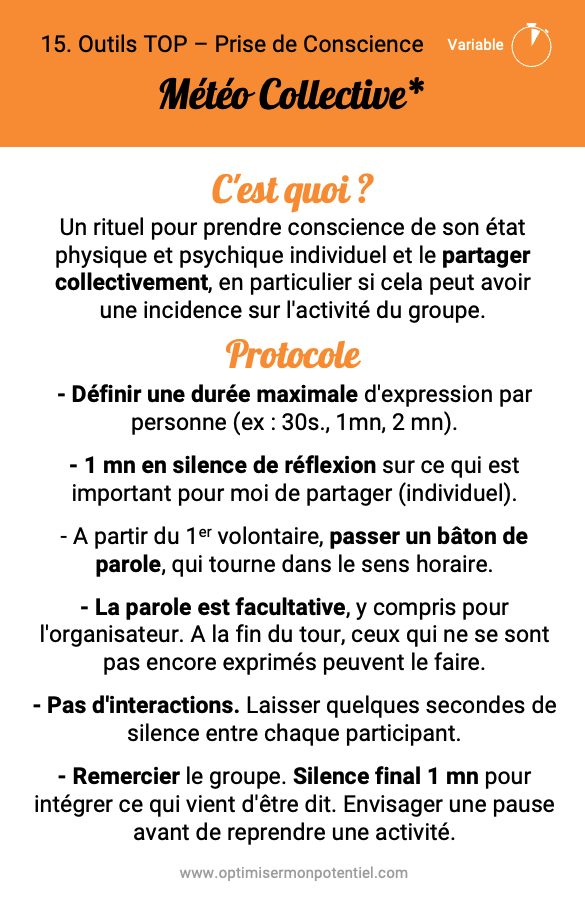
A tool for expressing, listening, understanding and *meta-communication of the psycho-physiological state of a group of individuals.
Definition : Individual speaking space in collective listening over a period of time determined according to the size of the group.
Main objective : Place in the center of the circle what is important to you at this moment after a time of reflection, share your current state. This approach promotes a better understanding of what is happening at this moment for each individual and which can influence their behavior. It triggers a feeling of empathy favorable to the exchange.
Each participant is free to express themselves within a set time of 1, 2 or 3 minutes depending on the size of the group (avoid exceeding exchanges of more than 30 minutes):
*Meta communication: Metacommunication is therefore the ability to communicate about how we communicate. It invites you to take a step back, to gain perspective on what is happening in the relationship. It requires an ability to get out of the situation experienced while living it to the fullest.

Relaxing breathing draws on a universal instinctive reflex: the sigh of relief. This simple but powerful technique consciously reproduces this natural mechanism that everyone uses spontaneously to release tension and annoyance. In just a few breaths, it transforms your inner state.
This approach is based on specific neurophysiological mechanisms. Prolonged exhalation activates the vagus nerve and stimulates the parasympathetic nervous system, immediately triggering a cascade of soothing reactions: cardiac slowdown, muscle relaxation, and the release of calming neurotransmitters.
This breathing also reduces the production of cortisol, the stress hormone, while promoting the production of serotonin and oxytocin, creating a natural and lasting state of well-being.
Three to five calm breaths are enough to trigger this transformation. The fundamental principle: The exhale should be longer than the inhale. A simple rhythm consists of inhaling over 1 beat and exhaling over 3 counts, preferring abdominal or full breathing.
This technique can be adapted to all situations: after acute stress to regain calm, before sleeping to make it easier to fall asleep, or simply to promote recovery during the day. Its discretion allows it to be used in all circumstances.
Duration: 1 minute of immediate relief

The RMD is The reference relaxation technique in the TOP universe! This fundamental relaxation method guides you to deep muscular relaxation that automatically leads to mental calm. Imagine being able to “unplug” your voltages like turning off a switch...
RMD draws on your natural ability to relax your muscles consciously. It turns your body into a real one Sanctuary of Serenity, releasing accumulated toxins and restarting circulation.
🧠 THE MIND-BODY PRINCIPLE
RMD is based on a fascinating neurological phenomenon:
🌱 PREPARATORY PHASE
🔄 WORK PHASE - THE CORE OF TECHNOLOGY
⚡ PSYCHO-PHYSIOLOGICAL RECOVERY
🎯 IDEAL SITUATIONS
🎆 GUARANTEED PROFITS
Duration : 5 to 20 minutes of pure relaxing happiness!
RMD is your Passport to serenity. A proven technique that turns your stress into positive energy!
The audio is deliberately offered without resumption in order to be used to fall asleep or to keep your state of relaxation for a few more minutes before resuming. In this case, plan to set an alarm to start the recovery.
Like any session involving relaxation, it should be done well before an activity because of possible hypovigilance.

A relaxation technique, also called Contractive-Relaxed, is particularly interesting when you have trouble relaxing your muscles right away. It allows you to better feel the difference between tension and relaxation.
It involves relaxing all the muscles after a previous contraction. This method is interesting (as such or included in R3P) for people who have trouble relaxing their muscles right away because they are not aware of their tensions or for those who think “you have to make an effort to deserve relaxation”.
It is also popular with athletes who have had the opportunity to see the benefits of relaxation after a sporting effort, that is to say after muscle tension.
The prior voluntary contraction allows you to better feel the relaxation that follows and to obtain a deeper relaxation than the initial relaxation.
Nota: Take time to breathe freely between each exercise to be repeated at least 3 times
Specify during the briefing that the contraction must be dosed and not maximum because the objective is to feel the difference between the 2 states, contracted/relaxed. It is common for some people to reconsider this instruction after cramps.
Like any session involving relaxation, it should be done well before an activity because of possible hypovigilance.

A relaxation technique, which is a review of the body 'without doing anything', interesting when you feel under high tension to get rid of the 'wanting' and the temptation to control.
It consists of focusing your attention on the different parts of your body, simply taking note of the condition of your muscles (relaxed, tense) without judgment and without acting. It's about getting rid of the will in order to let the imagination run wild.
The underlying principle is that if “you don't teach someone who drowns to swim,” you don't teach someone who is under high tension to relax either. Paradoxical relaxation is then an interesting alternative to direct or indirect muscle relaxation.
Duration: 5 to 20 min
Like any session involving relaxation, it should be done well before an activity because of possible hypovigilance.

A psychological recovery technique that, once developed, can be used alone or integrated into relaxation (RS or R3P).
The ID will correspond to preferential sensory modalities: visuals will see “objects” (color, elements of nature, characters...), auditors will hear relaxing music, pleasant sounds, kinesthetics will experience sensations of relaxation (lightness, heaviness, cotton, well-being, serenity...). Some will use multiple sensory channels.
The different types of relaxing image:
The Image of Relaxation can be uni- or multi-sensory, correspond to reality or be imaginary:
Duration: 5 to 20 min
Like any session involving relaxation, it should be done well before an activity because of possible hypovigilance.

A relaxation technique, where attention is paid to sensory aspects, inspired by Schultz's Autogenic Training. It differs in particular in the exercise of heart control, which has been suppressed because it generates too many unpleasant sensations. Indeed, it can be nerve-wracking for some people to hear or not hear their heart beating!
Achieve relaxation for the purpose of physical recovery and stress management.
As always at TOP, the subject has total freedom to take into account the suggestions offered or to have other sensations.
**Exercises 1 and 2 are free. **
PRECAUTION
Like any session involving relaxation, it should be done well before an activity because of possible hypovigilance.
Duration: 5 to 20 min


A scientifically validated relaxation that allows you to recover physically and repay part of your sleep debt. Developed with the Army Biomedical Research Institute (IRBA), it offers 20 minutes of optimized recovery.
Duration: Exactly 20 min

The mini-nap, also called “power nap”, represents the art of optimized recovery. In just 4 to 5 minutes, this technique allows you to effectively recharge your mental batteries without entering the deep phases of sleep that would cause drowsiness and disorientation.
Unlike nighttime sleep, which aims at overall physical recovery, mini-naps specifically target mental regeneration. It allows you to clear your brain's memory cache, restore your attention span and boost your cognitive energy without compensating for a real sleep debt.
This precise duration of 4-5 minutes corresponds to the optimal time to benefit from the restorative effects of rest without reaching deep sleep phases. This way you avoid the post-sleep inertia that characterizes longer naps.
The mini nap fits perfectly into modern working life. It can be practiced in the office, in a sitting position, transforming your chair into a recovery tool. For beginners, choose a quiet and dark environment.
The protocol starts with a few calm breaths that prepare the nervous system. Close your eyes and check your TOP weather forecast to assess your condition. Follow up with an R3P type of relaxation adapted to the short duration.
Always allow for a period of 5 to 10 minutes of post-sleep inertia. This transition phase can be shortened by energizing breaths that gradually reactivate your state of alertness.
Duration: Exactly 5 minutes
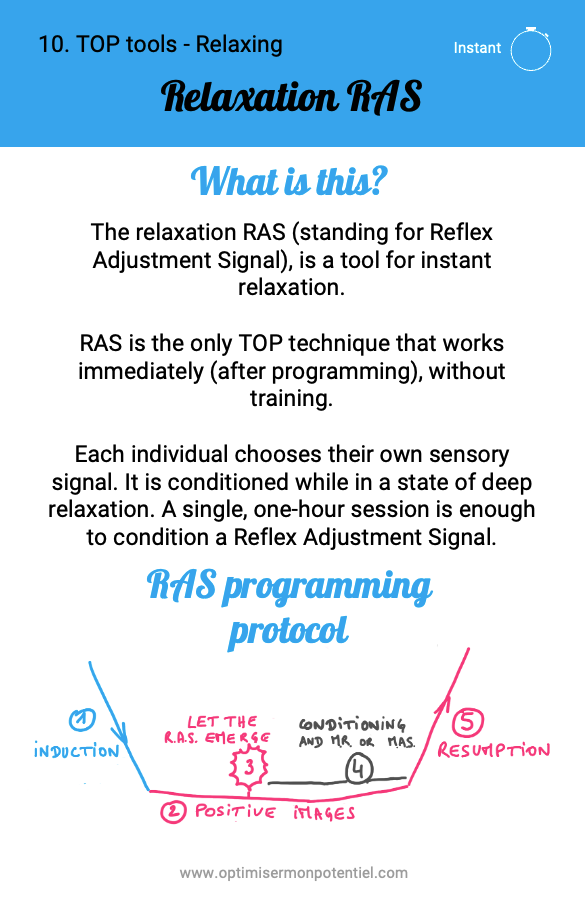
The Relaxation Reflex Adjustment Signal allows you to relax instantly.
It is a TOP technique that works immediately (after programming), without training.
The sensory signal chosen by each person is conditioned in a state of profound relaxation. A single one-hour session is enough to let a Reflex Adjustment Signal emerge and condition it.
The protocol follows an anchoring cycle with:
Duration: Instantaneous

Execution instructions:
1/ Briefing
2/ Installation in a quiet standing position by breathing exercises
3/ Standing position - Body stuck against the wall
4/ Semi-lying station, feet against the wall, legs at 90° (or on a chair).
5/ Extended station
6/ End of session
PRECAUTION
Like any session involving relaxation, it should be done well before an activity because of possible hypovigilance.
Duration: 10 to 20 min
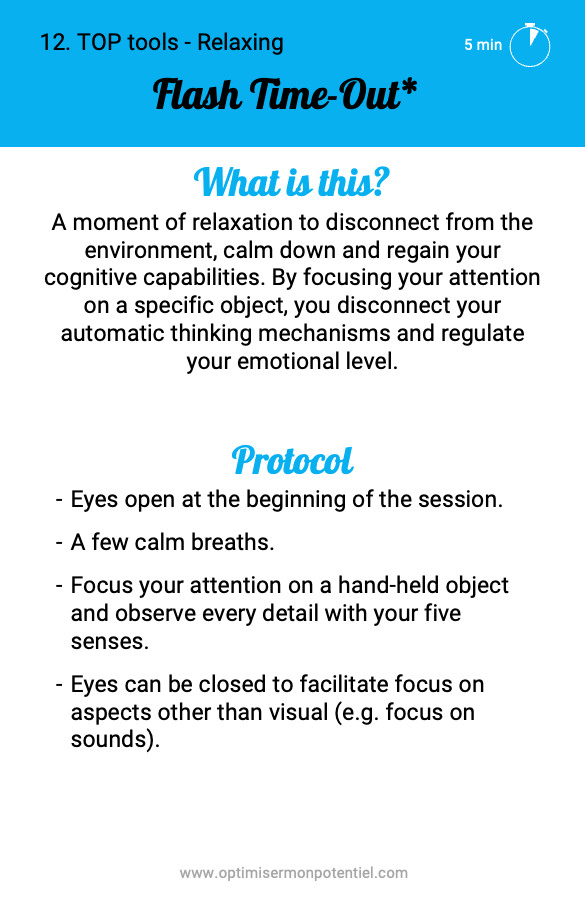
The Flash Disconnect is the perfect survival tool in an age where hyperstimulation and threats are constant. This express technique allows you to instantly get out of the whirlwind of stress that pushes your brain to focus on anxiety-provoking thoughts, which activates the amygdala (seat of fear) and maintains an alert state.
✅ Break the cycle of stressful thoughts
✅ Activates the rational brain (prefrontal cortex)
✅ Regulates the nervous system (lower cortisol)
✅ Free up resources to think clearly
✅ Creates an anchor in the present
✅ Alleviates the feeling of powerlessness in the face of the situation
By deliberately directing your attention to the environment (sounds, colors, textures...), you interrupt the cycle of ruminations and negative thoughts. It's like “rebooting” an overloaded computer by closing useless tabs (stressful thoughts). This activates the prefrontal cortex (linked to reason and emotional regulation), reducing amygdala hyperactivity.
In a world where every minute counts, the Flash Disconnection allows you to regain emotional and rational balance. This technique takes advantage of our brain's remarkable ability to quickly switch from a state of stress to a state of control thanks to simple but precise stimuli.
The beauty of this technique is its simplicity. All we have to do is focus our attention on our environment or an object by describing it in such a way as to activate our senses.
By observing your environment, you activate the prefrontal cortex, which allows you to choose your response rather than undergoing an impulsive and automatic reaction (flight, fight, inhibition) in connection with stress.
In a situation of threat, the brain seeks stable landmarks. Focusing on neutral details (e.g. the noise of a fan, the texture of a tissue) stimulates the parasympathetic, responsible for relaxation because the brain processes sensory information before emotions. By naming what you see, hear, or touch (e.g., “I can feel the fresh wind on my skin”), you activate neutral brain areas, which decreases emotional intensity and brings you back to the present moment.
This technique can be used everywhere (important meetings, sports competitions...) and is particularly effective during unexpected and potentially traumatic events (accidents, attacks...). Its discretion and effectiveness make it the perfect ally for your daily balance.
Duration: 30 seconds to 1 minute
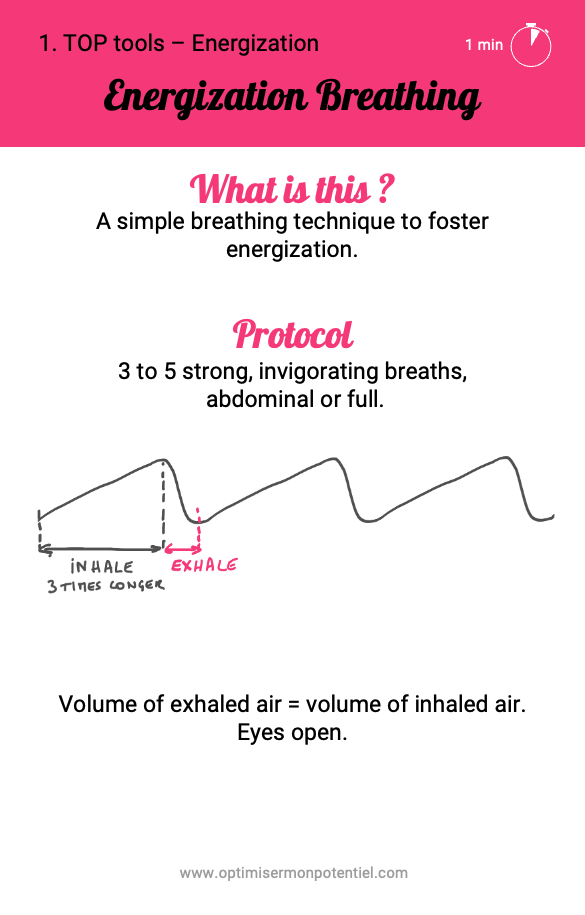
Energizing breathing is your natural turbo ! This express dynamization technique draws on an innate reflex: that of taking a “big breath of fresh air” before launching into action. In a few conscious breaths, it awakens your energy, mobilizes your resources and propels you towards your goals.
Based on precise physiological mechanisms, this TOP technique transforms your breath into real performance fuel. Simple, fast and incredibly effective!
🔥 ACTIVATION OF THE SYMPATHETIC SYSTEM
Your energizing breath triggers a natural physiological cascade:
⚡ THE GOLDEN RULE : The inhale is longer than the exhale
📋 PRECISE TECHNIQUE :
🎯 CONCRETE EXAMPLE :
🚀 LAUNCH SITUATIONS
🎯 TARGETED GOALS
✨ INSTANT EFFECTS (in 1 minute):
This TOP technique gives you direct access to your energy potential. A genuine natural boost within breath!

Psycho-Physiological Recovery is the crucial phase that brings you safely back to a state of optimal alertness after any relaxation technique. This often overlooked step can be dangerous if it is incomplete, causing 30-minute hypovigilance that compromises your abilities.
After a phase of deep relaxation, your nervous system requires a gradual transition to regain its fully operational capacities. Without this structured recovery, you may remain in an intermediate state where alertness and muscle tone remain insufficient for normal activities.
This transition phase gradually reactivates your sympathetic system, restores muscle tone, and restores your optimal attention level. It is a real neurological bridge between relaxation and performance.
Recovery starts with a clear intention to regain energy and alertness. This mental preparation programs your nervous system for the transition to come. The three energizing breaths relaunch cerebral oxygenation and gradually activate your metabolism.
Muscle dynamization wakes up your body through gentle movements that restore tone. Energizing images mentally stimulate your level of activation. Stretching and opening your eyes complete this return to normal alertness.
This sequence guarantees a secure transition that allows you to resume your activities safely, with an optimal level of energy and attention.
Duration: 2 to 10 minutes

Psycho-Physiological Dynamization revolutionizes traditional preparation by synchronizing mental and physical warm-up. This integrative technique simultaneously prepares your body and mind for activity, creating optimal synergy between your physical and mental resources.
This holistic approach recognizes the fundamental interconnection between body and mind. By combining physical movements and mental processes, DPP activates specific neuromuscular circuits while preparing psychologically for performance. This double activation optimizes your overall potential.
The protocol integrates breathing, positive internal dialogue, targeted visualization and movements adapted to your activity. This combination creates a state of complete readiness that cannot be achieved by a purely physical or mental warm-up.
The session starts with three abdominal breaths that center and prepare. In inspiratory apnea, you perform specific movements: shoulder pumps, rotations, jumps, depending on your activity. This controlled activation phase stimulates your nervous system.
After a few seconds of effort, exhalation and relaxation create a contrast that amplifies body awareness. Between the exercises, the mental visualization of future gestures and attitudes completes this integrative preparation.
The encouraging internal dialogue maintains a positive and focused mental state throughout the preparation, creating the optimal conditions for your future performance.
Duration: 2 to 5 minutes

Mental Pre-Activation is your optimal preparation ritual before any important activity. This technique of dynamization and motivation mobilizes your ability to adapt in a few minutes, allowing you to approach each challenge in the best psychological conditions.
PAM recognizes that each activity requires a specific level of activation. A public presentation requires a different status than a job interview or a sports competition. This technique allows you to finely adjust your internal state according to the requirements of the situation.
The key prerequisite is to assess your current stress level to determine if you need to relax or energize. This self-assessment guides the choice of your approach to reach your optimal activation zone.
The protocol follows an effective anchoring cycle starting from your initial activation level. The imagination phase of the activity allows you to mentally project yourself into the future situation, anticipating challenges and visualizing your success.
The clear activity stage refines this preparation by specifying your goals and strategies. The final recovery brings you to your optimal activation level, perfectly calibrated for future performance.
This express preparation turns apprehension into positive expectation, replacing paralyzing stress with constructive activation that optimizes your chances of success.
Duration: 1 to 5 minutes
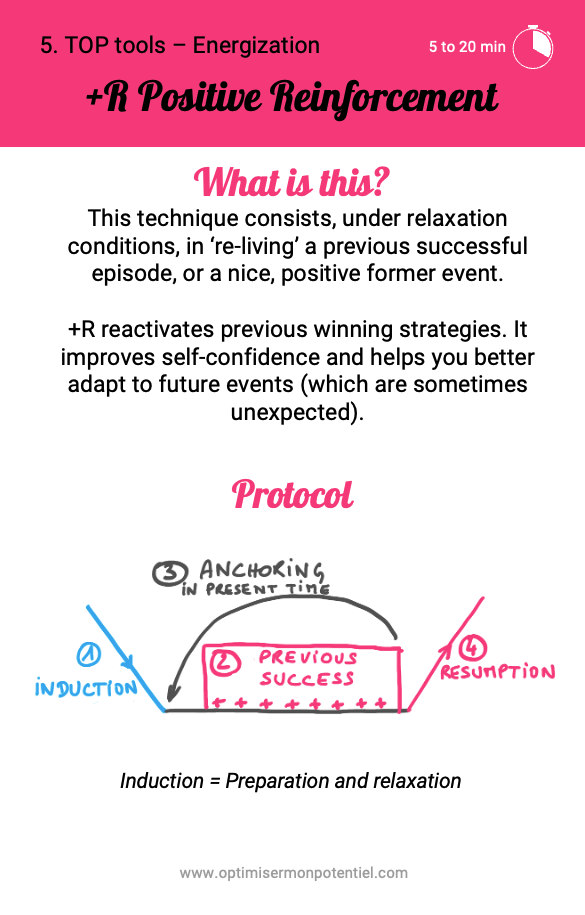
Positive Reinforcement turns past successes into fuel for future challenges. This powerful technique consists in consciously, in a relaxed state, reliving your previous successes in order to reactivate the winning strategies that lie dormant in you and strengthen your confidence in the long term.
This approach is based on a fascinating neurological principle: intensely reliving a positive experience reactivates the same neural circuits as during the original event. Your brain cannot distinguish a lived experience from one that is deeply remembered, allowing you to refresh your resources for success.
R+ improves your self-confidence by strengthening your sense of personal effectiveness. It also reactivates your previous winning strategies, those particular combinations of mind, emotions, and actions that led you to success.
The session starts with an induction creating the optimal state of relaxation for this positive exploration. The central phase is to mentally relive significant success by mobilizing all your senses. The richer and more detailed the experience, the more powerful the anchor will be.
Anchoring yourself in the present is the crucial step in connecting this past resource to your current challenges. This phase transforms a memory into a usable tool, creating a bridge between your yesterday's successes and tomorrow's ambitions.
R+ becomes particularly valuable before important deadlines, allowing you to approach future adaptations with the confidence that you already have the keys to success.
Duration: 5 to 20 minutes

Mentally repeat a gesture, a sequence or a complete activity in a relaxed state to get energized and ready for action. This dynamization technique uses mental imagery.
Mental repetition activates the same brain areas as real action. It improves performance without physical fatigue.
It is a dynamization technique that consists of mentally repeating, in a relaxed state, until it is well executed:
The most effective sensory modalities are the visual and kinesthetic modalities. For auditors, it may be interesting to associate a sound (related to the activity) or music with the visualization and experience of an action. Visuals can do this exercise after watching the video of an expert (see video in attachment) or of themselves perfectly performing the gesture.
Imaging work can take several forms:
In practice, the choice of one or other of the modalities (alone or in combination) will depend on the objectives and the activity: an athlete can devote fifteen minutes to imagining a precise gesture of a few seconds or 5 minutes for a complete action. However, it will always be necessary to end with a timed Mental Repetition (analytical or sequential for a long-lasting action) since the subject will tend to reproduce what he imagined.
The protocol follows a structured anchoring cycle:
Imagine the action mentally and perfectly successful, each movement and/or each gestural sequence and/or the test in its totality.
The repetition will be external for the visuals or for working this modality in others. It will be internal for kinesthetics or to develop it. The ideal is to use both modalities. A positive internal dialogue may be included (detailed description of actions, motivation).
It is a question of bringing back “here and now” all the positive ideas and then letting go (the unconscious and the reflexes put in place).
With training, subjects will find that imagining an action positively will encourage them to perform it perfectly.
Important rule : Always end with a real speed MR (partial or total)
Duration: 5 to 20 min
The subject is in the action to be taken and he mentally starts again, better if necessary, an action that he actually carried out before. This therefore requires a minimum of knowledge on the skill to develop such as the video allowing you to practice making a bow tie in order to be able to mentally redo it.
It is also important to work in the tempo of the gestures to be performed at the end of the exercise when the MR is done at a slow or accelerated pace because the brain will be conditioned to this rhythm.
Like any session involving relaxation, it should be done well before an activity because of possible hypovigilance.

A mental imagery technique that allows you to organize and optimize your resources to achieve your goal in a relaxed state. It allows you to approach an objective by optimizing your resources and organization.
The MAS uses the brain's ability to anticipate and prepare. In a relaxed state, the brain can program strategies for success more effectively.
Mental Anticipation of Success (MAS) is an essentially dynamization technique that allows you to approach any situation positively and in full possession of your means, especially if it is experienced as stressful.
The term “anticipation” was chosen because the subject anticipat himself mentally into the future to imagine the success of his objective. This word can be replaced by that of “programming” because it is also a question of setting up a program of actions to be carried out in order to carry out an activity successfully.
Mental Anticipation of Success therefore corresponds to a more or less long-term expectation of a perfectly carried out action. You can prepare for the next day's action as well as for the one that will take place in several months. In the latter case, intermediate goals will have to be positively “programmed” because their success will not only make it possible to reach the final objective, but will create positive reinforcement. This will give confidence in the method at first (“It works! ”) and then, above all, will develop self-confidence (“I can do it! ”).
The protocol follows a structured anchoring cycle:
(We recommend using the SMARTIES method, see video...)
Duration: 5 to 20 min
The main indications for MAS are motivation and stress management.
MAS is the preferred technique for motivating yourself, re-motivating yourself and preparing yourself positively for an action. It will be necessary to emphasize the feeling of competence (“you imagine that you have succeeded and how you are doing to succeed”, giving feedback) and the feeling of free choice (it is the subject who imagines how he is organized, what actions he will have to do to reach his goal...). MAS plays a key role in setting goals and is an integral part of the six-step motivational process model.
MAS acts on the representation that the subject has of himself and of the situation he is (or will be) confronted with. It makes it possible to de-dramatize the situation.
Indeed, the subject imagines that he has succeeded (but for the unconscious it is as if it had been really successful) and all the means he must implement to succeed (he knows how to do it). So the situation seems quite surmountable. MAS is therefore one of the techniques for strengthening self-confidence and assertiveness. It allows you to “start winning”.
Like all TOP techniques, it develops attention and the power of concentration. It is therefore interesting for optimizing learning. It is therefore part of the toolbox for preparing for exams, sports competitions and all professional or fun activities.
With training, MAS teaches everyone to take care of and assume responsibility for themselves, and therefore to be autonomous and responsible.
MAS is used to improve sleep quality by focusing mental imagery on the activities of the next day. It also promotes personality structuring in young people.
We therefore note that this technique allows both to be energized and to regulate oneself for a short (tomorrow), medium (one week) or long (six months) term objective and, as it is carried out in a state of relaxation (physical and mental) it promotes immediate recovery.
While MAS represents a technique of choice to be proposed as soon as possible, it requires the subject to know how to relax and easily access mental imagery.
Like any session involving relaxation, it should be done well before an activity because of possible hypovigilance.
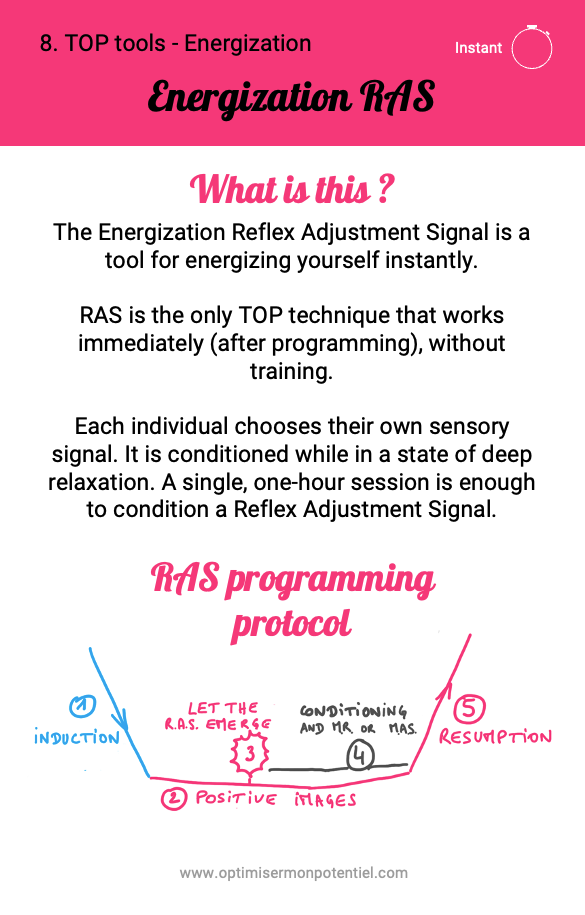
The Energizing Reflex Adjustment Signal is your instant personal accelerator. This unique TOP technique makes it possible to go from a state of rest to a state of optimal performance in a few seconds, as if you had a personal energy switch.
Unlike traditional techniques that require gradual learning, the Dynamisation SAR works immediately after programming. This approach uses advanced conditioning principles to associate a sensory signal chosen by your unconscious with a state of dynamism and optimal energy.
The process creates a conditioned reflex that automatically triggers the activation of the sympathetic system, the increase in heart rate, and the release of adrenaline and dopamine - the hormones for performance and motivation.
The creation of your SAR follows a packaging protocol in four phases. Induction establishes optimal conditions, followed by exposure to positive and energizing images that activate your energy resources.
The critical phase sees the spontaneous appearance of your personal cue - a gesture, image, word, or sensation that your subconscious mind naturally selects. Packaging definitely anchors this signal-dynamization association.
A single session is enough to install this personal turbo. Therefore, activating your signal instantly triggers energy, motivation and readiness for action.
Activation time: Instantaneous

The Mental Anticipation of Behavioral Success turns your physical space into a planning laboratory. This innovative technique uses movement and spatial anchoring to optimize the organization of your resources and create a winning strategy towards your goals.
This unique approach recognizes that our body has an intelligence of its own that enriches our mental processes. By physically moving between the different stages of your project, you activate specific brain areas related to spatial planning and episodic memory.
Movement amplifies the contextualization of each stage, allowing you to concretely experience the physical and emotional sensations associated with your progress. This multi-sensory approach anchors your action plan more deeply.
The protocol uses sheets placed on the ground representing the various steps. You start by clearly defining your objective, then physically position yourself on this “destination” to fully experience the outcome.
Returning to the starting point, you plan each stage progressively, moving physically from one to the other to physically integrate the progression. This spatialization creates a living and embodied action plan.
The final anchoring, achieved by returning to the beginning, consolidates this mental and physical map of your future success.
Duration: 20 minutes of optimized organization

Cognitive MAS allows you to quickly get into concrete work by putting your thoughts in front of you.
It is a derivative of “classical” MAS, keeps its dynamizing character allowing to approach its objective positively and in full possession of one's resources.
Here, no induction or resumption, it is a question of reviewing the 4 steps, namely:
It can take the form of a conversation with the subject and thus ask questions to provide more precision and/or in written form such as a chronological timeline, mindmap.
It makes it possible to have all the steps verbalized and thus identify the semantics used, the blocking points that are conscious or not, the entry points facilitated at the level of the Beck triangle (thoughts, emotions, behaviors), and the timing required at each stage.
It can be very useful for people who are indecisive or even resistant to more introspective sessions, such as paradoxical relaxation to relax.
This is a type of approach that can be very relevant in a support approach in order to gradually bring about more unconscious MAS work.
Thus, cognitive MAS represents a technique of choice to be proposed as soon as possible to “hook” the person by avoiding pitfalls in subjects with low imagery quality, uncontrolled relaxation or resistance to relaxation.

A breathing technique to regulate your emotional and physiological state, allowing you to find an optimal balance: neither too activated, nor too relaxed. It is inspired by cardiac coherence.
Regulatory breathing influences cardiac variability and balances the autonomic nervous system between sympathetic activation and parasympathetic relaxation.
Basic Rhythm : Balanced Breathing
Variants According to Needs :
This technique makes it possible to:
Durata: 2 to 5 min

Technique that allows you to change your perception of stressful situations by working on your thoughts and beliefs. It is based on the fact that stress often depends more on our interpretation of events than on the events themselves.
Stress is a dynamic process involving a cognitive assessment at three levels:
1. Primary assessment : “Is it important for me?”
2. Secondary assessment : “Do I have the resources to cope?”
3. Reassessment : Adjustment according to experience
Duration: 5 to 15 min

Activation Level Regulation represents one of the most sophisticated TOP techniques because it combines all the techniques learned in a very refined version. This approach combines neuroscience and relaxation to create a state of optimal psychophysiological harmony.
Our autonomic nervous system oscillates between sympathetic activation (“action” mode) and parasympathetic relaxation (“recovery” mode). In our hyperconnected society, this pendulum tilts towards chronic over-activation, generating stress and fatigue.
RNA acts as a smart thermostat that rebalances these two systems. It relies on breathing, relaxation, visualization and internal dialogue to activate the brain's natural self-regulatory mechanisms, allowing the nervous system to regain its adaptive capacity.
RNA derives from the experience acquired with the practices of different techniques in order to extract the most relevant elements for a given situation. You thus personalize the technique to your needs of the moment and according to what is effective for you.
For example, to increase your level of activation before speaking in public, you will do two breaths with movements during the apnea phase, activate a positive past image and visualize the action to come. So you used your knowledge of DPP, R+ and MR without really having done the protocols.
This ability to use RNA is based on training on the complete protocols of the various techniques in order to then practice them in immediate application in one's daily life by eliminating certain steps.
The benefits include better stress management, optimized sleep and a better perception of your internal state in real time.
Duration: 1 to 20 minutes
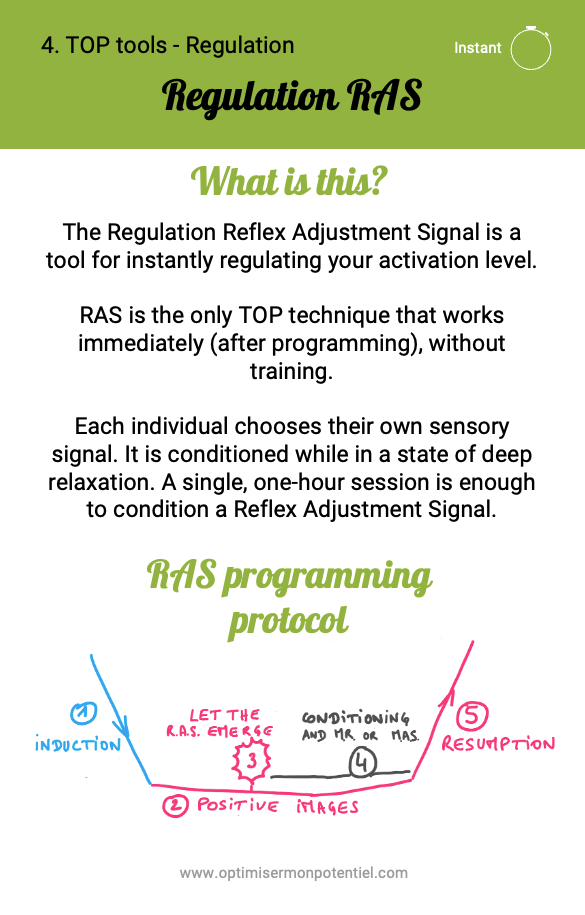
The Reflex Regulation Adjustment Signal represents the most immediate TOPs technique. This method allows you to instantly regain your emotional and physiological balance, as if you had a personal reset button.
Unlike other TOP techniques that require progressive training, the SAR works immediately after programming. This technique utilizes the classical conditioning mechanisms discovered by Pavlov, adapted to modern emotional regulation needs.
The process involves combining a personal sensory signal (to be determined during the session) with a profound state of balance and relaxation. This association creates a conditioned reflex that automatically triggers appropriate physiological and psychological responses.
The creation of your personal SAR follows a precise anchoring cycle in four phases. Induction first establishes the optimal conditions for conditioning. The balance images then activate your internal regulatory resources.
The crucial phase concerns the natural appearance of the signal and its conditioning. That unique moment when your unconscious spontaneously chooses the most appropriate signal for you. Finally, the recovery consolidates this new neurological programming.
A single programming session is generally sufficient to permanently install this SAR. Therefore, the activation of your personal signal instantly triggers a return to balance, whether you are over-activated or under-activated.
Activation time: Instantaneous

Internal dialogue represents that inner voice that accompanies us constantly, commenting on our actions and influencing our emotions. This approach in TOPs transforms this often negative mental chatter into a real ally of performance and well-being.
We all have a constant dialogue with ourselves, often without realizing it. These automatic thoughts can either propel us to success or they can sabotage us. Internal Dialogue consists in consciously regaining control of this mental conversation to make it a tool for personal optimization.
This approach is based on cognitive neuroscience, which demonstrates the direct impact of our thoughts on our emotional and physiological states. By voluntarily modifying our internal dialogue, we reprogram our brain for more adapted reactions.
The master's degree takes place in three phases. First, develop an awareness of your own thoughts without judgment to identify recurring negative patterns. Then, rephrase actively by replacing criticism with kind encouragement. Finally, anchor these new constructive formulations.
Examples of positive statements:
Cement of the 3 TOP pillars (Breathing, Relaxation and Mental Imagery), present at all times, Internal Dialogue practiced in a more conscious and positive way becomes a second nature that sustainably transforms your mental landscape.
Duration: Continued practice, gradual integration

Issued from cardiac coherence This controlled breathing technique synchronizes heart rate, breathing, and nervous system.

Stress is specific to humans, it is a set of natural responses to adapt to an eminently variable environment. The body constantly seeks to maintain its physiological and psycho-cognitive balance through complex biological and cognitive systems.
We must realize that stress exists and that it can be beneficial or pernicious, a driver or a brake. It is important to know how to identify the causes of stress and your own stress reactions by asking yourself a few questions:
Once the subject has answered these questions, he will look for various ways to speed up the adaptation processes, including TOPs (not to mention common sense).
The RAGE protocol makes it possible to conclude this chapter through the following 4 objectives:
TOPs intervene at the level of the cognitive evaluation that the subject makes of himself and the situation. They make it possible to strengthen the physiological, psychological and behavioral mechanisms of adaptation to any stress situation by promoting adapted stress. They help subjects to regulate their energy so that they can make the best use of their potential.
Finally, the different ways to manage stress are:
Attention: If you are not trained or monitored by a practitioner and are experiencing significant disturbances, consult a therapist. TOP techniques modify maladaptive reactions without necessarily treating their root causes, which can have consequences in some pathological cases.
This educational content allows you to discover the TOP method and to support your learning if you follow the practitioner training*.
It does not qualify you to accompany people. Only face-to-face training guarantees the acquisition of the necessary professional posture.
*according to your subscription
We are delighted to present you the new version of your Cartes-top platform, completely redesigned to offer you an even richer and more intuitive experience
Navigate more easily thanks to our new interface, designed to be more fluid and accessible. We have reworked each element to make your exploration of TOP techniques even more enjoyable.
Find the maps you need instantly with our new smart filters. Search by theme, level of difficulty, or type of technique to quickly access the tools adapted to your situation.
.png)
Each TOP card has been enriched with new detailed information, making your learning even more complete.
Enjoy more intuitive navigation, a modernized design and optimized ergonomics for all your devices. Whether you are on a computer, tablet or smartphone, Cartes-top adapts perfectly to your needs.
We are delighted to present you the new version of your Cartes-top platform, completely redesigned to offer you an even richer and more intuitive experience
Navigate more easily thanks to our new interface, designed to be more fluid and accessible. We have reworked each element to make your exploration of TOP techniques even more enjoyable.
Find the maps you need instantly with our new smart filters. Search by theme, level of difficulty, or type of technique to quickly access the tools adapted to your situation.
Each TOP card has been enriched with new detailed information, making your learning even more complete.
Enjoy more intuitive navigation, a modernized design and optimized ergonomics for all your devices. Whether you are on a computer, tablet or smartphone, Cartes-top adapts perfectly to your needs.
We are delighted to present you the new version of your Cartes-top platform, completely redesigned to offer you an even richer and more intuitive experience
Navigate more easily thanks to our new interface, designed to be more fluid and accessible. We have reworked each element to make your exploration of TOP techniques even more enjoyable.
Find the maps you need instantly with our new smart filters. Search by theme, level of difficulty, or type of technique to quickly access the tools adapted to your situation.
Each TOP card has been enriched with new detailed information, making your learning even more complete.
Enjoy more intuitive navigation, a modernized design and optimized ergonomics for all your devices. Whether you are on a computer, tablet or smartphone, Cartes-top adapts perfectly to your needs.
We are delighted to present you the new version of your Cartes-top platform, completely redesigned to offer you an even richer and more intuitive experience
Navigate more easily thanks to our new interface, designed to be more fluid and accessible. We have reworked each element to make your exploration of TOP techniques even more enjoyable.
Find the maps you need instantly with our new smart filters. Search by theme, level of difficulty, or type of technique to quickly access the tools adapted to your situation.
Each TOP card has been enriched with new detailed information, making your learning even more complete.
Enjoy more intuitive navigation, a modernized design and optimized ergonomics for all your devices. Whether you are on a computer, tablet or smartphone, Cartes-top adapts perfectly to your needs.

.png)
.png)
.png)