What is it?
Postural relaxation is a specialized TOP technique that is revolutionizing your relationship with your body! This unique method combines therapeutic stretching, conscious breathing, and muscle relaxation to correct postural imbalances and release deep-seated tensions.
Specially designed to counter the harmful effects of our modern lifestyles (prolonged sitting, stress, carrying loads), RpO acts as a Complete postural reset that restores your body to its natural alignment.
The intention
🎯 RPO priority targets
Relaxation of key postural muscles:
- Spine : the entire vertebral column
- Osteopathic muscular line : from the shoulder girdle to the pelvis
- Emotional muscles : diaphragm and psoas (stress storage areas)
Correction of common deformations:
- Kyphotic attitudes : arched back, rolled shoulders
- Anteversion of the pelvis : excessive camber
- Cervical tensions : stiff and tight neck
Respiratory optimization:
- Diaphragm stress in large amplitude
- Abdominal and complete breathing on 3 levels: Belly - Chest - Shoulders (VTE)
- Stretch-exhale sync for maximum relaxation
The principles of execution
⚡ Precise methodology
Use of the wall:
- Support for the feeling of the correct placement of the column
- Helps to erase cervical and lumbar curvatures
- Stable reference for precision work
Respiratory technique:
- Opening the shoulders thanks to full breathing
- Maximum lengthening of the spine
- Placing the stretch on the slowest and deepest exhale possible
Execution procedures:
- Minimum 3 reps per fiscal year
- Very slow execution and controlled
- No pain No discomfort tolerated
- Adaptation according to individual abilities
- Awareness body reactions before, during, and after
The complete protocol
🏗️ Structure of the session in 6 phases
Phase 1: Preparation
- Briefing and explanation of the objectives
- Installation in a quiet standing position
- Respiratory exercises
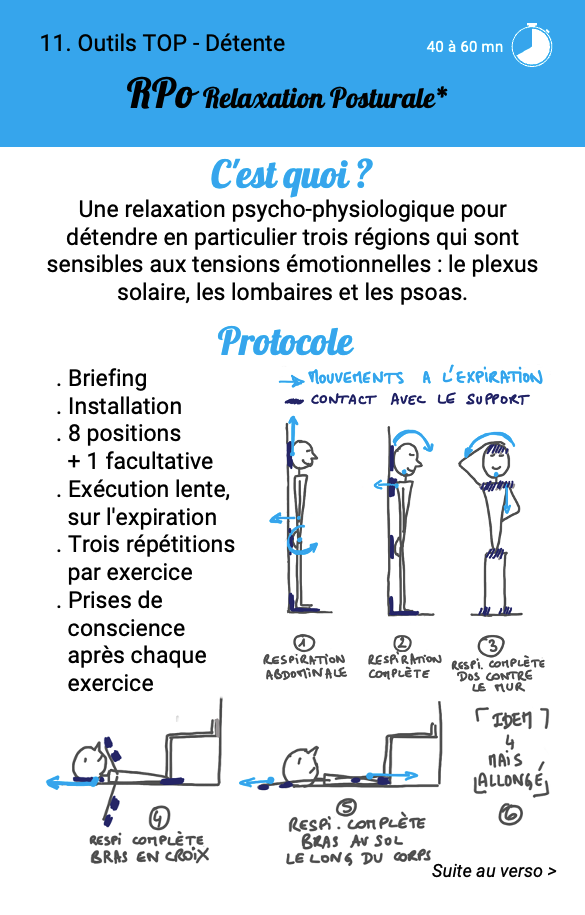
Phase 2: Stand up against the wall
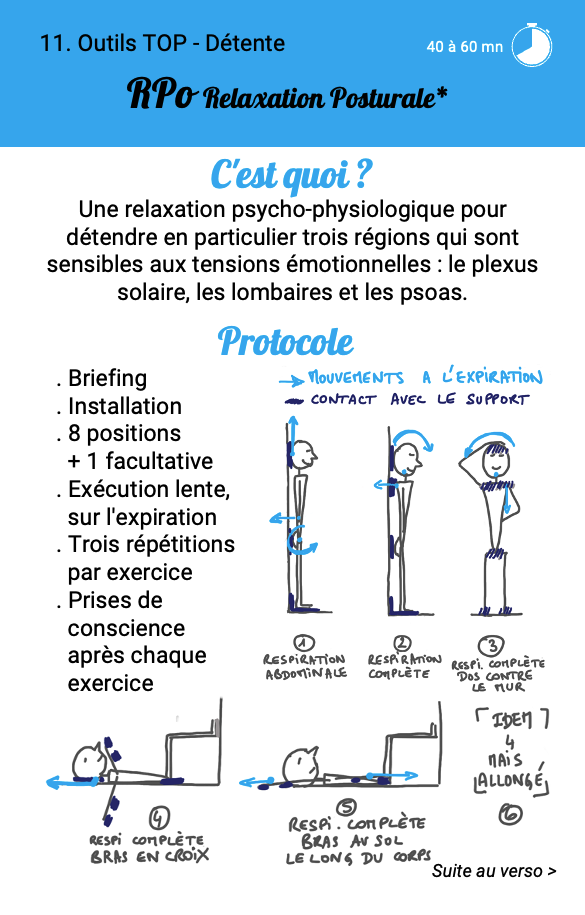
- Exercise 1 : Diaphragm stretch and lumbar region
- Exercise 2 : Correction of cervical hyperlordosis, stretching of the flexor muscles of the neck, spine and paravertebral erectors, trapezius upper fascicles. (picture 2)
- Exercise 3 : Stretching of the erector muscles of the spine and paravertebrals, trapezius, superior and median fascicles, rhomboids.(picture 3)
Phase 3: Semi-extended station
Position: feet against the wall, legs at 90° (or on a chair)
- Exercise 4 : Correction of cervical hyperlordosis attitudes, lengthening of the spine, stretching of the erector spine and thoracic muscles (small and large pectoral muscles).(picture 4)
- Exercise 5 : Stretching of the thoracic and postural muscles (para-vertebral: spinal and inter-spinous).(picture 5)
Phase 4: Extended station
- Exercise 6: Idem no. 4, lengthening of the spine and replacement of the cervical vertebrae.(picture 6)
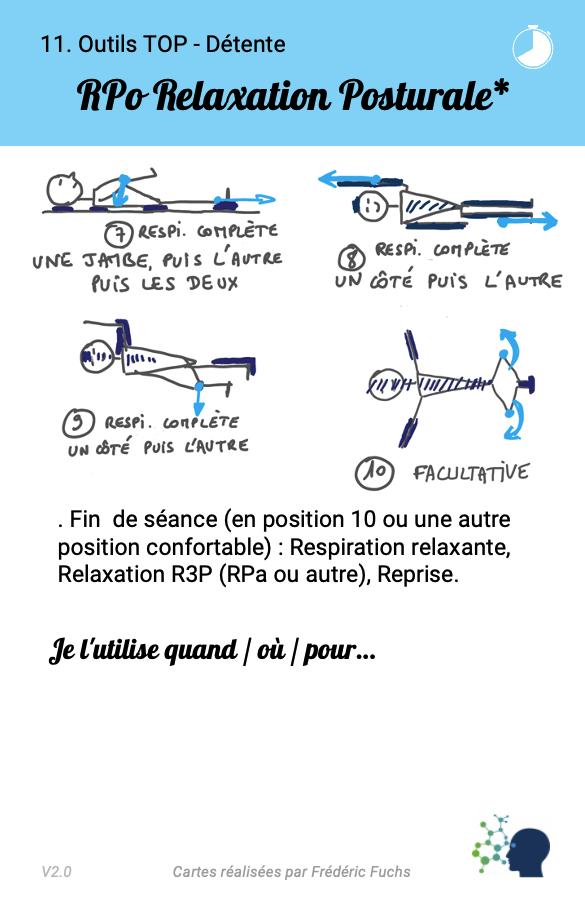
- Exercise 7: Stretching of the psoas and lumbar region.(picture 7)
- Exercise 8: Stretching of the lateral posterior muscle chain muscles (upper and lower extremities) (image 8)
- Exercise 9: Stretching of the gluteal muscles, lumbar chain and lateral osteopathy.(picture 9)
Phase 5: End of session
- Exercise 10: End of session picture 10 or another comfortable position and enjoy the relaxed state, aware of the changes
Phase 6: Post-session precautions
- Like any session involving relaxation, it should be done well before an activity because of possible hypovigilance.
When should you use rPO?
🎯 Ideal situations
- After long days In a sitting position
- In case of tension cervical or lumbar
- To counter stress accumulated in the body
- Before bedtime for a restful sleep
- In addition other TOP techniques
- In prevention musculoskeletal disorders
The benefits
✨ Visible and sustainable transformations
Postural improvement:
- Natural straightening of the spine
- Opening the rib cage
- Relaxing shoulders
- Neck lengthening
Physical well-being:
- Reduction in chronic pain
- Improving flexibility
- Optimization of breathing
- Revitals of vital energy
Psychological effects:
- Feeling of lightness
- Strengthened self-confidence
- Emotional stress released
- Better body image
Duration : 25 to 35 minutes of profound postural transformation
Important precautions
⚠️ Safety recommendations
- Possible hypovigilance : plan a rest before any activity
- Respect for boundaries Individuals
- Immediate stop In case of pain
- Adaptation according to existing pathologies
The RPO is your postural ally to regain an aligned, relaxed and energized body. A complete TOP technique that transforms your relationship with your body!
Add a note by clicking on the button below. 👇

.png)

.png)
.png)